Comparison guide
Timber vs uPVC Sash Windows for Period Properties
For a Regency or Victorian home in Cheltenham, timber sash windows almost always outperform uPVC on appearance, repairability and conservation acceptance. uPVC is cheaper upfront and lower maintenance, but its thick frames and limited lifespan make it a poor fit for period properties — and it is usually refused in conservation areas.
Request a Free Restoration Survey
Tell us about your windows and we will arrange a no-obligation survey, usually within five working days.
Timber vs uPVC comparison
| Factor | Timber | uPVC |
|---|---|---|
| Appearance and sightlines | Slim glazing bars, deep profiles, authentic mouldings | Thicker frames and bars; harder to match period detail |
| Conservation areas | Accepted or required in Cheltenham conservation areas | Usually refused in Montpellier, Pittville, Lansdown and Leckhampton |
| Lifespan | 80–100+ years with maintenance | 20–35 years; sealed units often fail sooner |
| Repairability | Can be spliced, re-puttied and rebalanced indefinitely | Difficult; replacement often means a whole new unit |
| Thermal performance | Excellent when paired with draught proofing and slimline glazing | Good when new; degrades as seals fail |
| Whole-life cost | Higher initial cost, lower lifetime cost | Lower initial cost, repeated replacement costs |
| End of life | Biodegradable timber; glass recyclable | Plastic waste; limited recycling options |
| Best suited to | Regency, Victorian and Edwardian period homes | Modern homes with no heritage constraints |
Why timber wins on period frontages
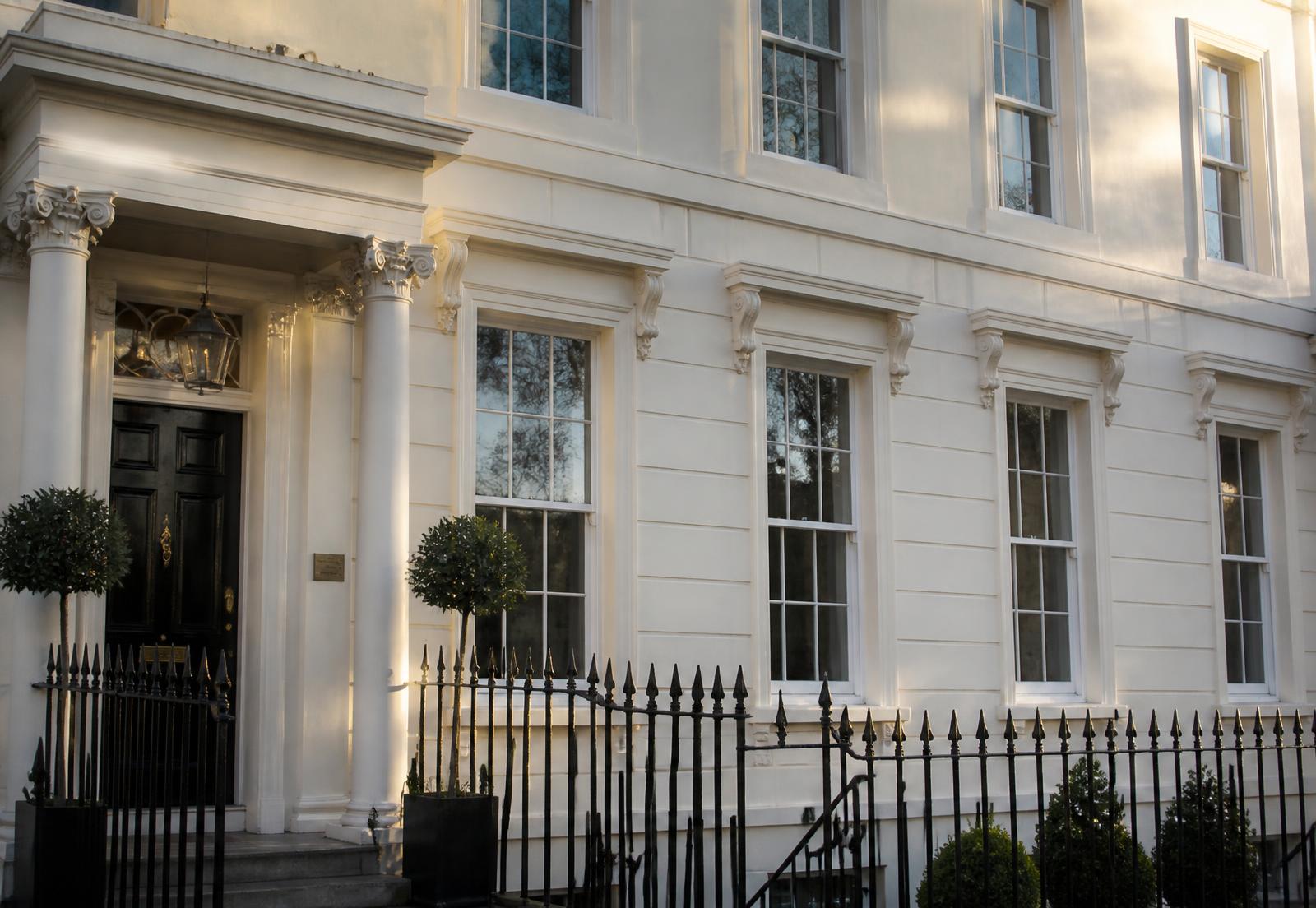
The frontages of Montpellier, Pittville, Lansdown and Leckhampton rely on slender glazing bars, deep timber profiles and authentic mouldings. uPVC cannot replicate these details at the same scale, which is why conservation officers routinely refuse it. Timber, properly painted and maintained, lasts 80 to 100 years and can be repaired piece by piece.
We use Accoya for maximum rot resistance, Sapele for dense hardwood stability, and slow-grown softwood where the original was pine. All are bedded in linseed putty and finished in microporous heritage paint so the timber breathes.
When uPVC is a reasonable choice
On a post-war or modern home with no conservation restrictions, uPVC offers a lower upfront cost and minimal maintenance. The trade-off is replacement every 20 to 35 years and little chance of repair. For period homes in Cheltenham, the council's design expectations and the visual impact on the street make timber the safer long-term investment.
Want to keep your original windows instead? See our sash window repair and draught-proofing services, or compare thermal upgrades in our heritage double glazing guide.
Timber vs uPVC Sash Windows for Period Properties FAQs
Ready to talk to a joiner?
Free survey and a written, per-window quote anywhere in Cheltenham and Gloucestershire.